A low-slope roof is a membrane or layered system over insulation boards, sloped just enough to move water to drains or scuppers. Hail can bruise or fracture the membrane, crush the insulation underneath, or crack the protective surfacing. Wind tends to work on edges and corners, peeling back metal edge flashing and lifting membrane that was not fully adhered.
Because water on a flat roof spreads sideways inside the insulation layer before it finds a gap in the deck, a leak inside can show up far from the damage. Wet insulation also adds weight and loses its insulating value, and it rarely dries well on its own under a membrane.
Many commercial roofs in Colorado Springs also carry rooftop HVAC units, skylights and exhaust fans that hail can damage. Those items often account for a large share of a commercial storm claim, so they deserve their own photos and notes.
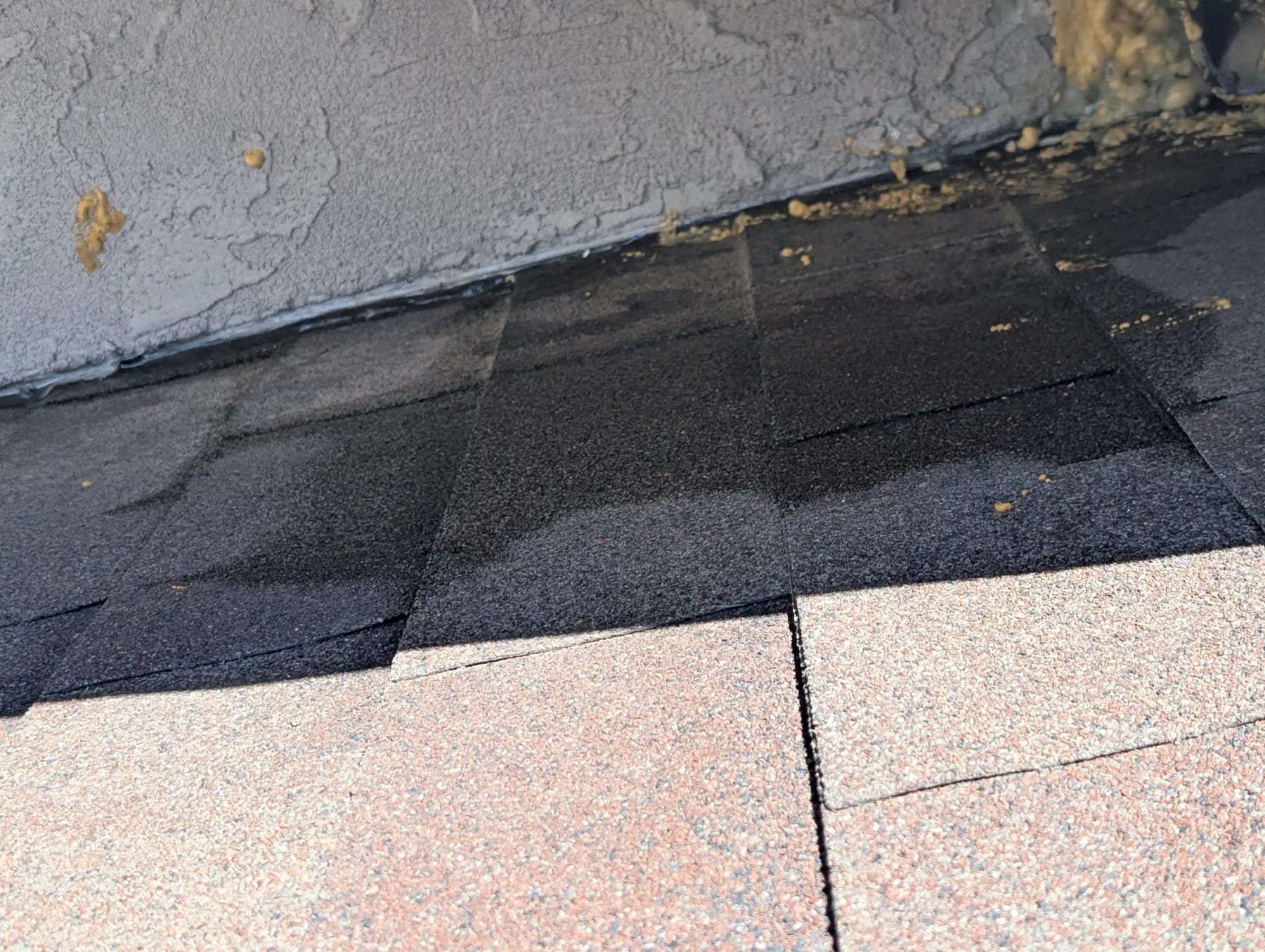
Low-slope roof with gravel debris against a stucco parapet. A representative photo of the task, not a record of work at any particular property.
Commercial roofing terms you will hear
- TPO
- Thermoplastic polyolefin, a single-ply membrane, often white, heat-welded at seams.
- EPDM
- A rubber single-ply membrane, often black, joined with adhesives or tape at seams.
- Modified bitumen
- Asphalt-based rolls with a reinforcing mat, torched or adhered, often with a granule surface.
- Built-up roof
- Layers of asphalt and felt topped with gravel, common on older commercial buildings.
- Core cut
- A small sample cut through the roof to see the layers and check for wet insulation.
- Infrared scan
- A thermal survey, usually at night, that can show where wet insulation holds heat differently.
- Scupper
- An opening at the roof edge that lets water drain off, often into a downspout.
- Coping
- Metal cap over the top of a parapet wall; wind often lifts it.
First checks for a business owner or manager
- Walk the interior for ceiling tile stains, drips and wet carpet, and note the locations on a floor plan.
- Check that roof drains and scuppers are not clogged with hailstones or debris, which can cause ponding.
- From a safe vantage point, look for peeled edges, displaced coping and torn membrane at corners.
- Photograph rooftop units, skylights and vents only if roof access is safe and permitted.
- Tell tenants in writing where leaks are and what is being done.
- Contact the roofing contractor who installed or maintains the roof, if known.
Common situations and responses
- IfWater is coming in over electrical or equipmentThenShut down affected equipment if safe, protect it, and get an emergency patch or temporary cover over the area.
- IfNo leaks yet but obvious hail marksThenAsk for an inspection that includes core cuts or a moisture survey before the claim is settled.
- IfThe edge metal or coping lifted in windThenSecure it quickly; loose edges let the next wind peel more membrane.
- IfTenants operate in the spaceThenCoordinate access, safety and noise; some leases assign interior responsibilities to tenants.
- IfThe roof is still under a manufacturer's coverage termThenAsk the manufacturer what inspection or contractor requirements apply to repairs.
General information for Colorado Springs, not a quote or professional advice. In an emergency, call 911.