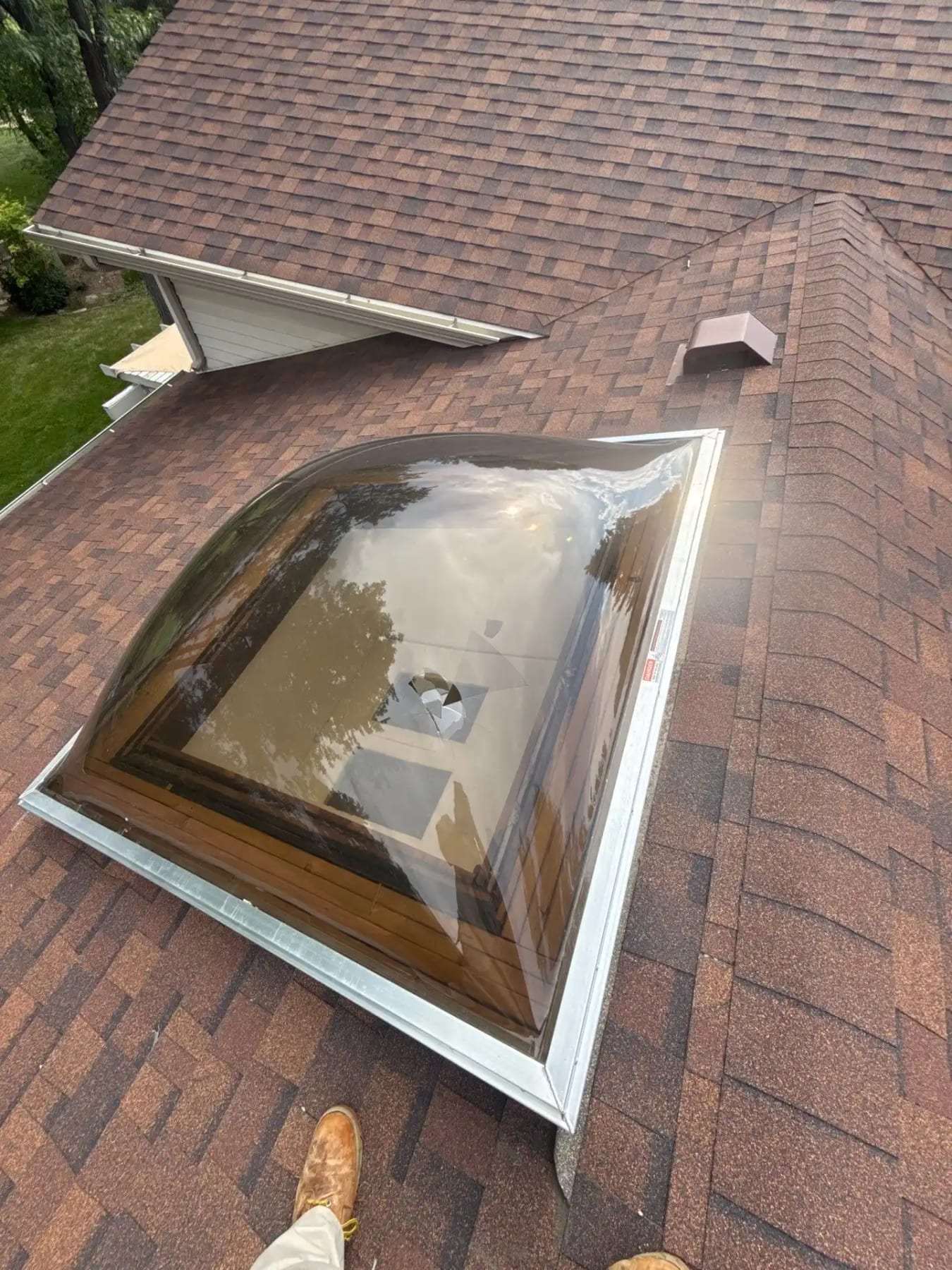
Shingled roof with a dome skylight seen from the roof. A representative photo of the task, not a record of work at any particular property.
What a hailstone does to a shingle
An asphalt shingle is a fiberglass mat soaked in asphalt and topped with ceramic-coated granules. The granules shield the asphalt from ultraviolet light, which is intense at Colorado Springs elevations. When a hailstone strikes, it can knock granules loose, dent the asphalt beneath, or crack the mat itself.
A crack or bruise in the mat may not let water in right away. Over the next seasons, the exposed asphalt dries in the sun, the spot becomes brittle, and the shingle can eventually split. That is why an adjuster or inspector focuses on whether the mat was fractured, not just whether a few granules are missing.
Size and density matter. Small, soft hail may only scatter granules; larger or harder stones driven by wind are more likely to fracture shingles. Wind direction also means one or two slopes often take far more hits than the others.
Hail hit versus ordinary wear
Inspectors compare the pattern of marks before deciding what caused them.
Usually hail
- Random pattern of round or oval marks across a slope
- Soft spot that gives slightly when pressed, like a bruise on fruit
- Fresh-looking dark asphalt where granules were knocked off
- Matching dents on vents, flashing, gutters and downspouts
- More hits on the slopes facing the direction the storm came from
Usually wear or other causes
- Granule loss concentrated at drip lines or valleys where water runs
- Blistering in small raised bubbles from heat or trapped moisture
- Cracking in a regular grid from age and thermal movement
- Scuffs in a line where someone walked or dragged equipment
- Damage only near trees, from branches rubbing
Terms you may see in an inspection report
| Term | Plain meaning | Why it matters to you |
|---|---|---|
| Functional damage | Harm that reduces the roof's ability to shed water or shortens its life | Most policies pay for this; it is the core of a hail claim |
| Cosmetic damage | Marks that change appearance without affecting performance | Some policies exclude it, especially on metal |
| Test square | A marked area, often ten feet by ten feet, where hits are counted | Shows the method behind a repair or replace recommendation |
| Collateral damage | Dents on softer metals and other items near the roof | Helps confirm a storm's hail size and direction |
| Mat fracture | A crack through the fiberglass reinforcement | Strong evidence of functional damage |
Questions to ask whoever inspects the roof
- Which slopes did you test, and how many hits did you count on each?
- Did you find fractures in the mat, or only granule loss?
- Can I have the photos, with the test squares labeled by slope?
- Are any of the marks older than this storm, and how did you decide?
- Does the damage support repair of some slopes or replacement of the whole roof, and why?
Common questions
My roof is not leaking. Do I still need an inspection?
If a significant hailstorm passed over and you see dents on gutters or vents, an inspection is reasonable. Leaks from hail-bruised shingles often show up later, after the window for an easy claim has narrowed.
Can two inspectors reach different conclusions?
Yes. Judging bruises involves some judgment. If you disagree with an adjuster's findings, ask the insurer about a re-inspection and provide your own inspector's photos.
General information for Colorado Springs, not a quote or professional advice. In an emergency, call 911.