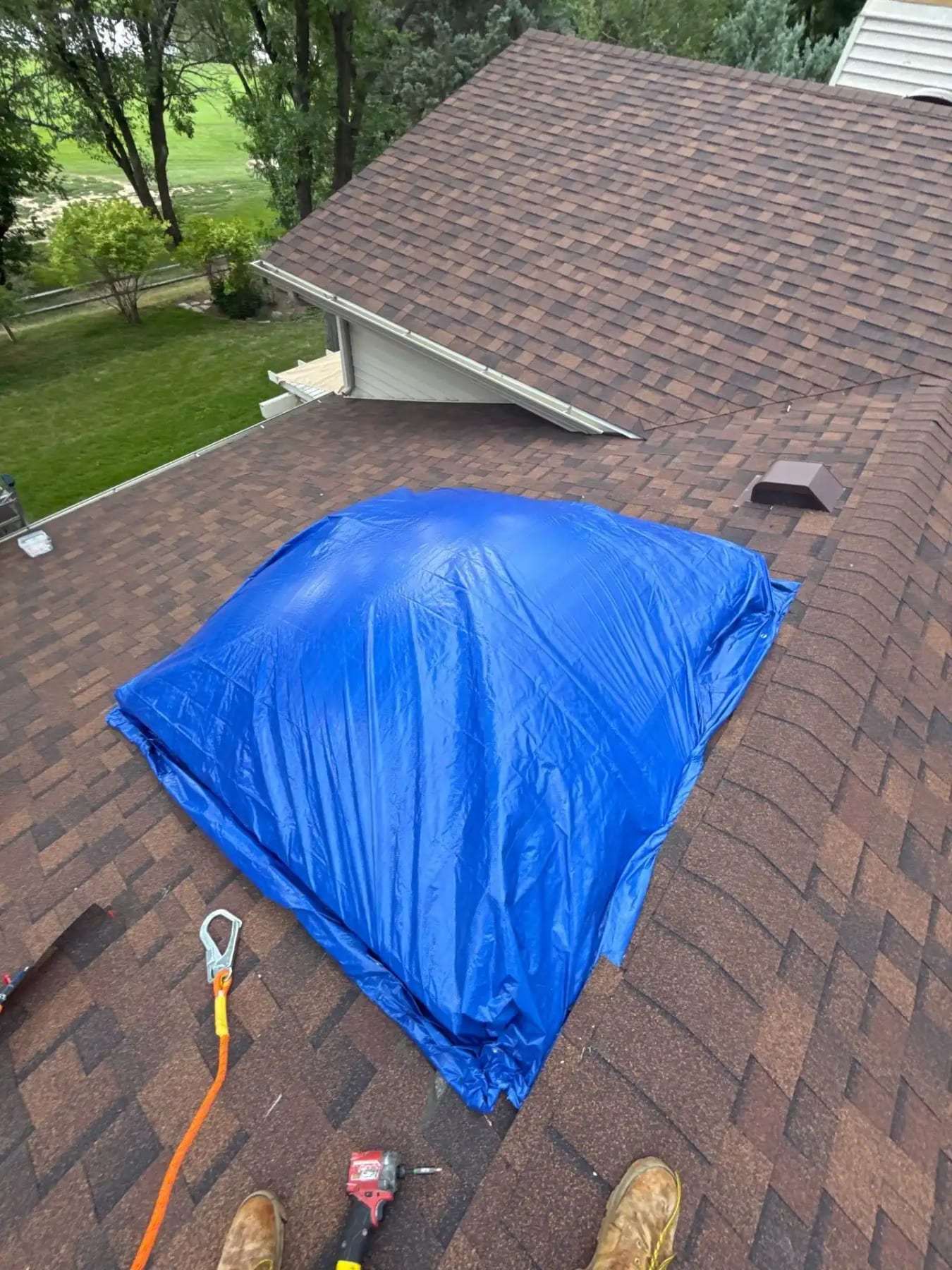
Blue tarp fastened over a section of shingled roof. A general example of this kind of work, not a photo of a particular home, business or job.
Why tarps fail here
Most tarp failures come down to wind getting underneath. Once a gust lifts an edge, the tarp acts like a sail, pulling at every fastener until something tears. Downslope wind events along the Front Range can last for hours, so a cover that would survive a quick summer squall may not make it through a winter night.
Sunlight is the second enemy. Ultraviolet exposure is stronger at Colorado Springs elevations than at sea level, and lightweight polyethylene tarps can turn brittle and split over a few weeks. A heavier tarp rated for outdoor exposure, or a reinforced roofing film, holds up longer if repairs are delayed by a backlog after a large hailstorm.
The third issue is water routing. A tarp has to send rain and snowmelt off the roof, not into a pocket that pools and pushes water under the edge. That means running the tarp up and over the ridge whenever possible, so water flows across it rather than behind it.
Signs of a careful installation
You can check most of these from the ground or from photos the installer sends.
- The tarp extends well past the damaged area on every side, not just over the hole.
- The upper edge wraps over the ridge onto the opposite slope, so water cannot run underneath.
- Edges are rolled around wood strips and fastened through the strips, rather than nailed through bare tarp.
- Fasteners go into the roof deck along the strips, spaced closely enough that the edge cannot lift between them.
- No sandbags or loose weights that wind could move or roll off the roof.
- Plumbing vents and other penetrations are cut around and sealed, not buried under the tarp.
- The installer gives you dated photos of the finished tarp and the damage underneath.
When to call back for a fix
- IfAn edge is flapping or you hear snapping in the windThenAsk for a return visit before the next weather. A loose edge usually gets worse, not better.
- IfWater is still dripping inside after rainThenThe tarp may not cover the true entry point. Water can travel along rafters before it shows on a ceiling.
- IfThe tarp has faded, cracked or torn at the foldsThenIt is past its useful life; replacement is cheaper than a new interior leak.
- IfSnow is drifting against the tarp at a valleyThenWatch for ice backing up under the edge, and ask whether the cover should be adjusted.
Common questions
How long can a tarp stay on a Colorado Springs roof?
It depends on the material and the installation. A heavy, well-anchored tarp may last weeks to a few months. Inspect it after every windy day and plan permanent repairs as soon as your claim allows.
Can I tarp my own roof?
Only if you have the equipment and experience to work safely at height, and only in calm, dry weather. For most people a professional tarp is the safer choice, and the cost is usually part of the claim.
General information for Colorado Springs, not a quote or professional advice. In an emergency, call 911.